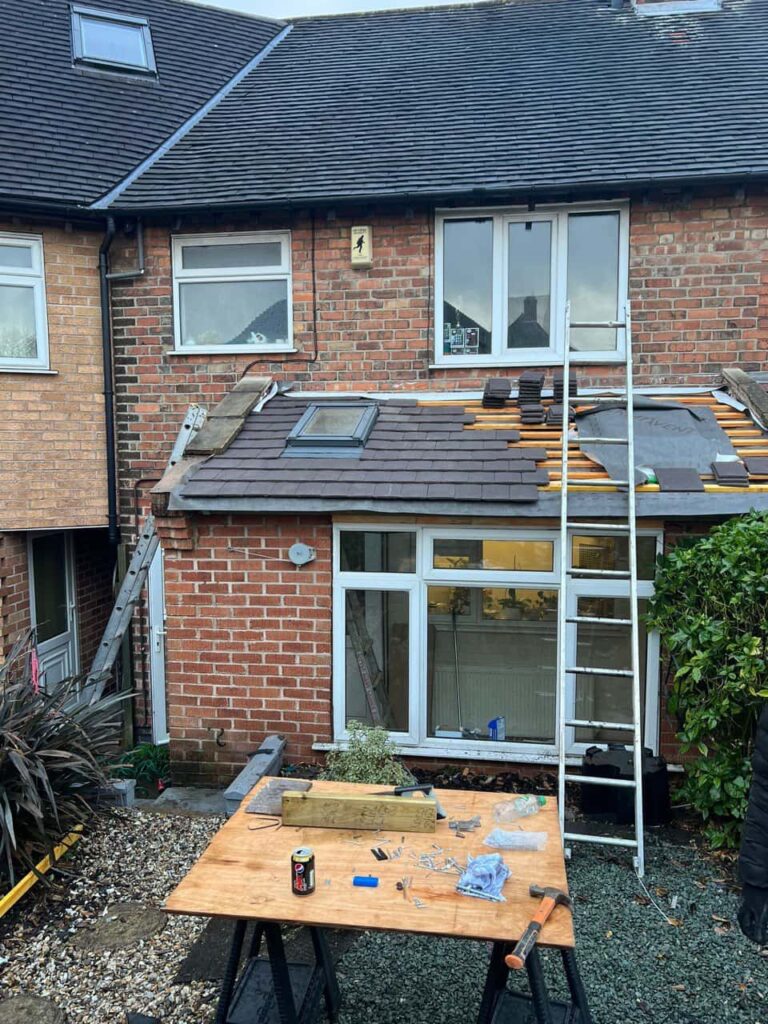
Hidden Issues That May Appear When the Old Roof Is Removed
A roof replacement involves more than fitting a new external covering. Once the existing tiles, slates, felt or membrane are removed, previously concealed parts of the roof become accessible for inspection. This can reveal deterioration that was impossible to assess fully from inside the loft or from the roof surface.
For property owners in Lingfield, Surrey, understanding what may be uncovered during a roof replacement helps explain why a thorough inspection of the exposed structure is so important.
Damp or Decayed Roof Timbers
Roof timbers can be affected by moisture entering through damaged coverings, failed flashing or long-standing leaks. The visible internal signs may be minor even when part of a rafter, batten or roof deck has remained damp for a considerable period.
Once the covering is removed, the roofing contractor may discover:
- Soft or discoloured timber
- Localised decay
- Split or weakened sections
- Water staining beneath previous leaks
- Areas that no longer provide secure fixing points
Affected timber should be assessed before new roofing materials are installed. Covering weakened sections without addressing them can compromise the stability of the finished roof.
Damaged or Inadequate Underlay
Roofing underlay provides an important secondary layer beneath tiles or slates. It helps manage moisture that passes through the outer covering and supports the roof’s overall weather resistance.
Older underlay may have become:
- Brittle or torn
- Sagged between rafters
- Perforated around fixings
- Damaged by prolonged dampness
- Poorly fitted at eaves and junctions
- Patched during previous repairs
During replacement, the old underlay can be removed and the surrounding areas examined before a suitable new layer is installed.
Rotten or Weakened Battens
Tiles and slates are commonly fixed to timber battens. These may look satisfactory from inside the loft while containing localised weakness beneath the external covering.
Damp battens can soften, split or lose their ability to hold fixings securely. Poor batten spacing or inconsistent sizes may also become apparent once the tiles are removed.
Replacing unsuitable battens gives the new roof covering a more reliable fixing base and allows the correct spacing to be established.
Previous Repairs That Concealed the Cause
A roof replacement may uncover old repairs carried out over several years. Some may have treated the visible symptom without correcting the original source of water entry.
Examples can include:
- Layers of sealant over failed junctions
- Incompatible repair materials
- Incorrectly positioned replacement tiles
- Short patches of underlay
- Mortar repairs covering movement
- Flashing fitted over damaged materials
- Multiple repairs concentrated in one area
Removing these layers allows the roof to be assessed as a complete system rather than as a collection of individual patches.
Defective Flashing and Roof Junctions
Leadwork and other flashing materials protect vulnerable junctions around chimneys, walls, valleys and roof penetrations. Their full condition may not be visible until adjoining tiles or slates have been lifted.
The contractor may find that flashing is:
- Too short to provide suitable coverage
- Cracked or split at folds
- Loose within joints
- Poorly dressed around corners
- Concealing damp materials beneath
- No longer compatible with surrounding work
Correcting these details during replacement helps ensure the new roof performs consistently around its most vulnerable areas.
Deterioration Around Chimneys
Chimney junctions contain several components that can contribute to water ingress. When the surrounding covering is removed, hidden defects may be found in the flashing, mortar, timber or roof deck.
Moisture may have travelled down the chimney structure before reaching the loft or ceiling, meaning the internal damp patch was some distance from the entry point.
A roof replacement provides an opportunity to inspect the chimney junction carefully and integrate it properly with the new covering.
Valley Damage and Poor Water Flow
Roof valleys carry significant volumes of rainwater. Their condition can be difficult to judge when edges remain covered by tiles or slates.
Once opened, a valley may reveal:
- Corroded or cracked lining
- Debris trapped beneath overlapping materials
- Insufficient support
- Deteriorated mortar
- Water staining along the valley boards
- Poorly formed laps or junctions
Because valleys are essential drainage routes, any weakness should be resolved before the surrounding roof is reinstated.
Problems at the Eaves
The eaves form the lower edge of the roof, where water is directed into the guttering. Hidden deterioration can develop where underlay, battens, fascia boards and roof coverings meet.
Removing the lower courses may reveal rotten timber, damaged underlay or inadequate support. Water may also have been running behind the gutter rather than into it.
Correct detailing at the eaves helps protect the roofline and ensures rainfall is discharged effectively.
Inadequate Ventilation
Moisture within a roof space does not always come from an external leak. Condensation can develop when warm, humid air meets colder roof materials and ventilation is insufficient.
During replacement, the contractor may find dampness, staining or mould associated with restricted airflow. This needs to be distinguished from rainwater penetration so that the correct improvement is made.
A new roof installation can incorporate suitable ventilation measures based on the roof’s design and existing airflow.
Irregular or Uneven Roof Structure
Older roofs can develop changes in level through timber movement, previous alterations or localised deterioration. These irregularities may become clearer after the covering and battens have been removed.
An uneven structure can affect:
- The alignment of tiles or slates
- Drainage towards gutters and valleys
- The appearance of the finished roof
- The security of fixings
- Junctions with adjoining features
The exposed roof should therefore be checked and corrected where appropriate before new materials are laid.
Unnoticed Damage Around Roof Penetrations
Vents, pipes, aerial fixings and other penetrations create additional junctions in the roof. Their seals and surrounding materials may have deteriorated without causing an obvious internal leak.
Replacement work allows these points to be inspected, repositioned or incorporated into the new roof covering with suitable detailing.
Why Hidden Damage Must Be Addressed
Installing new tiles, slates or membranes over defective supporting materials would leave the underlying weakness unresolved. The new covering relies on sound timbers, suitable underlay, secure battens and correctly formed junctions.
A professional roofing contractor should explain any concealed deterioration found after stripping begins and identify how it affects the replacement work. This ensures that the completed roof functions as one reliable system rather than simply providing a new outer appearance.
Conclusion
Roof replacement can uncover decayed timber, damaged underlay, weakened battens, defective flashing and problems around chimneys, valleys and eaves. It may also reveal previous repairs, poor ventilation or structural irregularities that were not visible during the initial surface inspection.
If your roof in Lingfield is deteriorating or requiring increasingly frequent attention, Lingfield Roofing Repairs can carry out a careful assessment and recommend an appropriate course of action. Addressing both visible and concealed defects helps create a replacement roof with a sound foundation and dependable long-term performance.
Call us on: 01342 649 596
Click here to find out more about Lingfield Roofing Repairs
Click here to complete our contact form and see how we can help with your roofing needs.