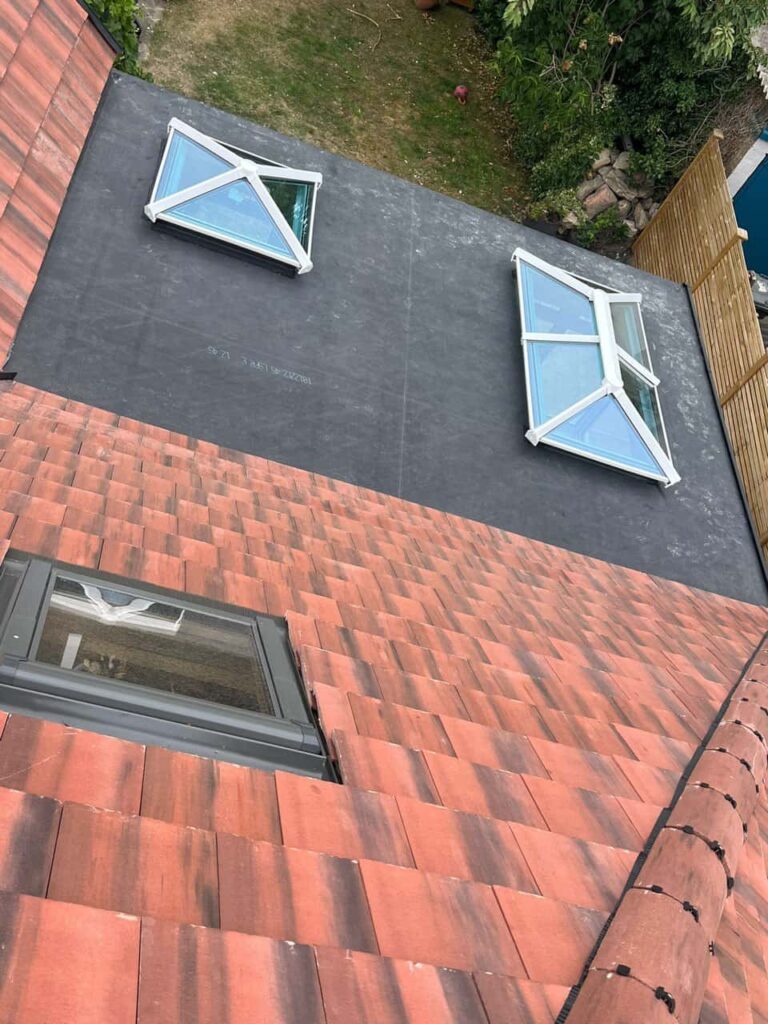
A slipped roof tile is often assumed to have moved because the tile itself has cracked or deteriorated. However, a tile can remain completely intact while the components holding it in position begin to fail.
Roof tiles rely on battens, fixings, nibs and surrounding tiles to remain correctly aligned. If any part of this supporting arrangement weakens, a sound tile may slide down the roof or move out of position. Identifying the actual cause is essential because simply pushing the tile back into place may not provide a lasting repair.
What Causes an Unbroken Roof Tile to Slip?
A tile should be considered as part of the complete roof covering rather than an isolated component. Its stability depends on how it was installed, the condition of its fixings and the materials beneath and around it.
Common causes of slipped roof tiles include:
- Corroded or failed nails
- Broken fixing nibs
- Deteriorated roof battens
- Strong wind lifting the tile
- Incorrect original installation
- Movement within the roof structure
- Damage to neighbouring tiles
- Previous repairs that have become loose
- Debris or moss affecting the tile position
A professional inspection can establish whether the fault is confined to one tile or indicates deterioration across a wider section of the roof.
Tile Fixings Can Corrode or Loosen
Depending on the roof covering and installation method, tiles may be secured with nails, clips or other mechanical fixings. These components remain exposed to changing temperatures and moisture over many years.
Metal fixings can gradually corrode, weaken or pull free from the batten. Once this happens, the tile may no longer resist gravity or wind movement effectively, even though its visible surface remains undamaged.
Replacing the tile alone will not resolve the problem if the fixing point beneath it is defective. The surrounding area should be checked to determine whether other fixings are showing similar deterioration.
The Tile Nib May Have Failed
Many roof tiles have small projections, known as nibs, on their underside. These hook over the roof batten and help the tile remain in position.
A nib can crack or break while the main body of the tile still appears sound. Because this damage is hidden beneath the covering, it may not be visible from ground level.
Once the nib has failed, the tile can begin sliding downwards. The movement may be gradual or may occur suddenly during strong winds. A replacement tile with intact fixing points is usually needed rather than reusing one that can no longer engage correctly with the batten.
Roof Battens May Have Deteriorated
Battens provide the horizontal support onto which tiles are fixed. If a batten becomes weakened by prolonged moisture exposure or decay, it may no longer hold nails and clips securely.
A slipped tile can therefore be the first visible indication of a problem beneath the roof covering. In some cases, the issue is localised around a previous leak. In others, several adjacent tiles may be affected because they share the same section of batten.
The extent of the deterioration must be established before deciding on the repair. Securing one tile to unsound timber is unlikely to remain effective.
Wind Can Lift Tiles Out of Position
Roof tiles are designed to overlap in a way that directs water down the roof. Strong or turbulent winds can create uplift pressure beneath exposed edges, particularly around ridges, verges and other vulnerable areas.
A tile does not have to break during this movement. It may lift just enough to disengage from its batten or loosen its fixing before settling in a lower position.
Once displaced, the tile may leave part of the underlay or neighbouring tiles exposed. Further wind can then reach beneath the surrounding covering more easily, increasing the possibility of additional movement.
Incorrect Installation Can Lead to Later Slippage
Roof tiles need to be installed at the correct gauge, alignment and overlap. The fixing method should also be appropriate for the tile type and the position it occupies on the roof.
If tiles were not adequately secured during installation, they may remain in place for a period before movement becomes apparent. Repeated wind exposure and temperature changes can gradually reveal weaknesses in the original work.
Signs of an installation issue may include several tiles slipping in a similar pattern, irregular courses or repeated movement in the same area. A broader inspection is useful when the problem is not limited to one isolated tile.
Movement in Adjacent Tiles Can Remove Support
Tiles rely partly on their arrangement with neighbouring units. If one tile moves, cracks or is removed, the tiles around it may lose some of their support and become more vulnerable.
This can create a chain of movement across a small section of the roof. The tile that appears to be the problem may not have been the first one to fail.
A suitable repair should therefore check the surrounding course, not just the most visibly displaced tile. Loose adjacent materials must be secured to restore the intended overlap and alignment.
Roof Movement Can Affect Tile Position
Roof structures experience small amounts of movement as timber responds to changes in temperature and moisture. Minor movement is expected, but more significant distortion can affect the alignment of battens and tiles.
A dipping roofline, displaced battens or movement around an adjoining roof feature can cause tiles to work loose. Where several tiles have shifted without obvious damage to their fixings, the supporting structure may require closer examination.
The cause should be understood before the roof covering is repaired, as surface work alone will not correct continuing movement beneath it.
Why a Slipped Tile Should Not Be Ignored
An unbroken tile may still create a weakness once it has moved from its intended position. The correct overlap can be lost, leaving an opening through which wind-driven rain may pass.
Water does not always appear inside the property immediately. Underlay may temporarily redirect it, or moisture may travel along roof components before becoming visible elsewhere. The absence of an internal leak therefore does not mean the covering is functioning correctly.
Prompt assessment can help prevent:
- Water reaching the underlay and battens
- Surrounding tiles becoming loose
- Wind entering beneath the roof covering
- Moisture spreading away from the visible defect
- A small repair developing into a wider problem
What Does a Proper Repair Involve?
The correct repair depends on why the tile slipped. The work may involve replacing a tile with a failed nib, renewing fixings, repairing a localised batten defect or securing surrounding tiles.
The roofer should also confirm that the overlap, alignment and drainage path have been restored. If several tiles are affected, the wider roof section may need to be examined for common fixing or batten problems.
Merely sliding the tile back into place without investigating its support can leave the original cause untreated.
Conclusion
Roof tiles can slip even when they are not broken because their fixings, nibs, battens or surrounding support have failed. Wind exposure, installation weaknesses and movement within the roof can also cause an intact tile to lose its correct position.
A slipped tile should be assessed before water ingress becomes visible, as the roof covering may already be vulnerable. Lingfield Roofing Repairs provides professional roof inspections and slipped tile repairs in Lingfield, Surrey. If you have noticed a displaced tile, contact the team to arrange an assessment and appropriate repair.
Call us on: 01342 649 596
Click here to find out more about Lingfield Roofing Repairs
Click here to complete our contact form and see how we can help with your roofing needs.